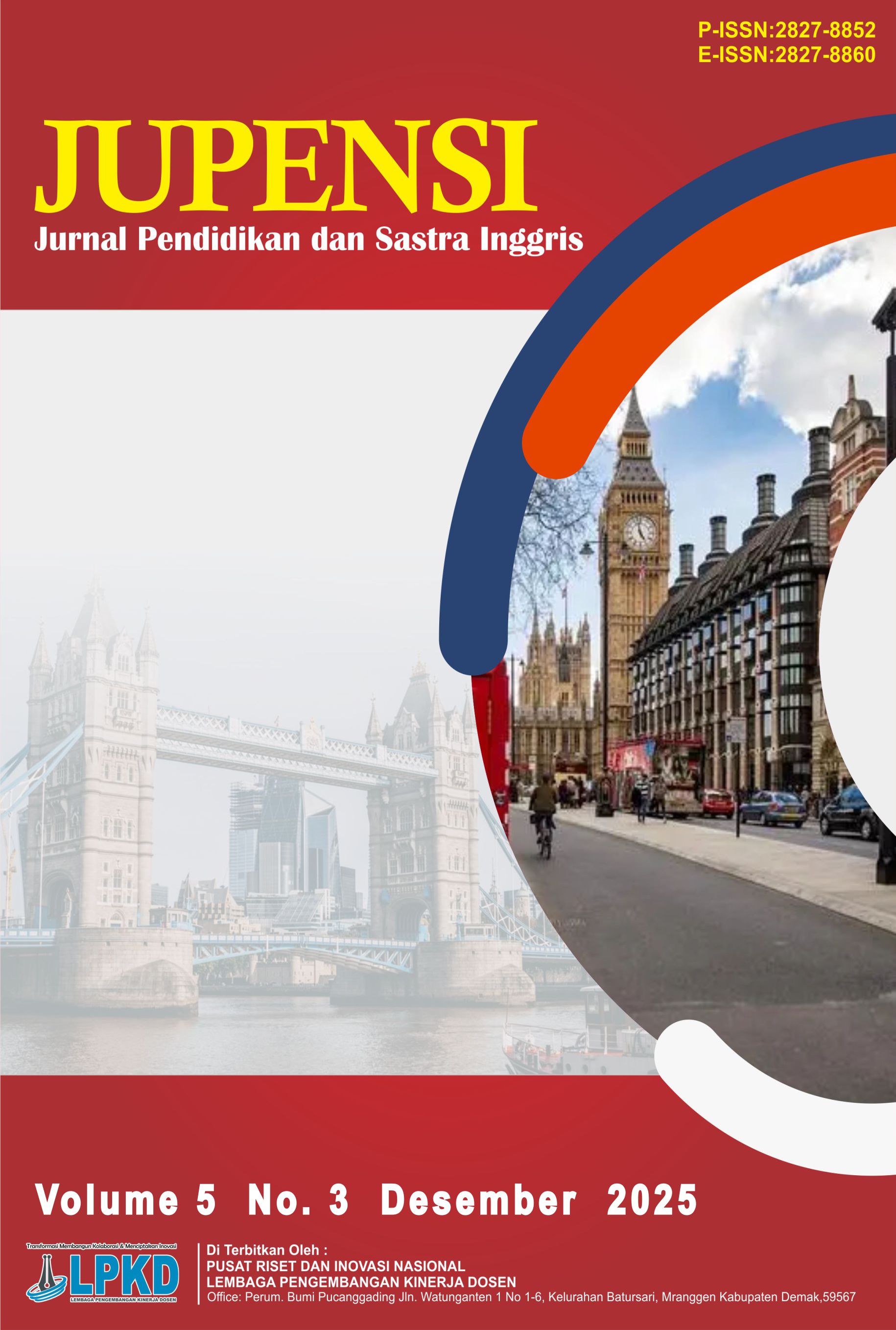
Peran SMA Islam Al Azhar 21 Sukabumi Berbasis Cambridge sebagai Upaya Peningkatan Kemampuan Berbahasa Inggris
DOI:
https://doi.org/10.55606/jupensi.v6i1.6801Keywords:
Al Azhar 21 Islamic High School, Cambridge Curriculum, English Language ProficiencyAbstract
This study aims to determine the role of Cambridge-based Islamic High Schools in improving English language skills. The background of this study is because education in the 21st century is characterized by very rapid technological developments and globalization. This study was conducted at Al Azhar 21 Islamic High School, Sukabumi, focusing on 4 discussions, namely: (1) The concept of Cambridge-based Islamic High Schools (2) Strategies for Cambridge-based Islamic High Schools in efforts to improve English language skills (3) The role of Cambridge-based Islamic High Schools in improving English language skills (4) Obstacles and solutions for Cambridge-based Islamic High Schools in efforts to improve English language skills. This study uses descriptive qualitative methods through observation, interviews, and documentation. The results of the study indicate that Cambridge-based Islamic High Schools have a significant and structured role because English is not only studied, but also used as a primary tool for learning and critical thinking at the academic level. The main obstacle comes from the readiness and competence of human resources (Teachers and Students) so that the solution is to hold an acceleration program for students who have never followed or studied using the Cambridge curriculum and also hold official training and certification from Cambridge in stages.
Downloads
References
Abrar, M. (2024). TEKNIK PENGUMPULAN DATA PENELITIAN KUALITATIF: SUATU PENGANTAR (1st ed.). UNJA PUBLISHER.
Anto, R. P., Yusriani, Ayu, J. D., Apriyeni, B. A. R., Adrianingsih, N. Y., & Putra, M. F. P. (2024). Metode Penelitian Kuantitatif (S. N. I. Trisnawati (Ed.)). Tahta Media Group.
Azhar, T. P. P. Y. Al. (2024). Profil Yayasan Pesantren Islam Al Azhar. Yayasan Pesantren Islam Al Azhar.
Azhar, Y. P. I. A. L. (2025). Kurikulum sekolah ypi al azhar 2025. Direktorat Pendidikan Dasar dan Menengah Yayasan Pesantren Islam Al Azhar.
Cambridge, I. (2018). Cambridge International AS Level dan A Level. 1(16 19), 1–4. https://www.cambridgeinternational.org/Images/502997-as-a-level-factsheet-bahasa-indonesia.pdf
Fauzan, I., & Iswantir. (2022). Konsep pendidikan sekolah islam terpadu. 1, 127–134.
Hajjaj, W. A. (2020). Integrasi Kurikulum (A. Riyadi (Ed.); Vol. 32, Issue 3). Literasi Nusantara.
Lincoln, Y. S., & Guba, E. G. (1985). Naturalistic Inquiry. Sage Publications.
Maduwu, B. (2016). Pentingnya Pembelajaran Bahasa Inggris Di Sekolah.
Miles, M. B., Huberman, A. M., & Saldana, J. (2014). Qualitative Data Analysis (3rd ed.). Sage Publications.
Putri, Y. E. (2022). Kurikulum Cambridge. 2(8.5.2017), 2003–2005. https://lib.unnes.ac.id/20002/
Rusdiana, A. (2024). Sistem Sekolah Islam Terpadu (T. Nurhayati (Ed.); 1st ed.). Pustaka Tresna Bhakti.
Saleh, S. (2023). Mengenal Penelitian Kualitatif. AGMA (Anggota IKAPI NO 054/SSL/2023).
Sugiyono. (2013). Metode Penelitian Kuantitatif, Kualitatif dan R&D. ALFABETA, CV.
Undang-Undang Dasar Negara Republik Indonesia 1945 (Vol. 1, Issue 1). (1945).
Wahyudin, D., & Dkk. (2024). Kurikulum Merdeka (T. K. P. K. dan Pembelajaran (Ed.)). Pusat Kurikulum dan Pembelajaran.
Downloads
Published
How to Cite
Issue
Section
License
Copyright (c) 2026 Jurnal Pendidikan dan Sastra Inggris

This work is licensed under a Creative Commons Attribution-ShareAlike 4.0 International License.

_001.jpg)